
Good eyesight is one of the most important parts of a child’s healthy development. From learning in school to playing with friends and exploring the world, children depend heavily on clear vision. Many parents, however, do not realize that eye problems in children can start very early and may not always show obvious signs. This is why a pediatric eye checkup and vision test clinic plays a very important role in protecting children’s eyesight and overall growth.
- What is a Pediatric Eye Checkup and Vision Test Clinic?
- Why Are Eye Checkups Important for Children?
- When Should a Child Have an Eye Checkup?
- Signs That a Child May Need an Eye Test
- What Happens During a Pediatric Vision Test?
- 1. Medical History
- 2. Vision Screening
- 3. Eye Movement Test
- 4. Refraction Test
- 5. Eye Health Examination
- 6. Additional Tests (if needed)
- Common Eye Problems in Children
- 1. Nearsightedness (Myopia)
- 2. Farsightedness (Hyperopia)
- 3. Astigmatism
- 4. Lazy Eye (Amblyopia)
- 5. Crossed Eyes (Strabismus)
- Treatment Options in Pediatric Eye Clinics
- How Parents Can Protect Their Child’s Eyes
- The Role of Early Detection
- Final Thoughts
- Frequently Asked Questions (FAQs)
In this article, we will explain what a pediatric eye clinic is, why eye checkups are important, what happens during a vision test, common eye problems in children, and how parents can take care of their child’s eyes. Everything is written in a simple and easy-to-understand way.
What is a Pediatric Eye Checkup and Vision Test Clinic?
A pediatric eye checkup and vision test clinic is a special medical place where eye doctors (usually pediatric ophthalmologists or optometrists) examine children’s eyes. These clinics are designed specifically for babies, toddlers, school-going children, and teenagers.
Unlike general eye clinics, pediatric eye clinics are more child-friendly. They use colorful tools, simple charts, toys, and gentle techniques to make children feel comfortable. The goal is to check how well a child can see, detect any eye problems early, and provide treatment if needed.
Why Are Eye Checkups Important for Children?
Children may not always complain about vision problems because they often assume that what they see is normal. But untreated eye issues can affect their:
- Learning ability in school
- Reading and writing skills
- Confidence in sports and activities
- Brain development and coordination
Regular visits to a pediatric eye checkup and vision test clinic help detect problems early, sometimes even before parents notice anything wrong. Early treatment can prevent long-term vision issues.
When Should a Child Have an Eye Checkup?
Many experts recommend that children should have their first eye checkup at:
- 6 months old (basic eye health check)
- 3 years old (vision development check)
- Before starting school (5–6 years old)
- Every 1–2 years after that
However, if a child shows any signs of eye problems, they should visit a clinic immediately.
Signs That a Child May Need an Eye Test
Parents should watch for warning signs such as:
- Squinting or closing one eye to see clearly
- Sitting too close to the TV or holding books very near
- Frequent headaches
- Eye rubbing or blinking too much
- Trouble reading or poor school performance
- Eyes not moving together (crossed eyes)
- Complaints of blurry or double vision
If any of these signs appear, it is important to visit a pediatric eye checkup and vision test clinic as soon as possible.
What Happens During a Pediatric Vision Test?
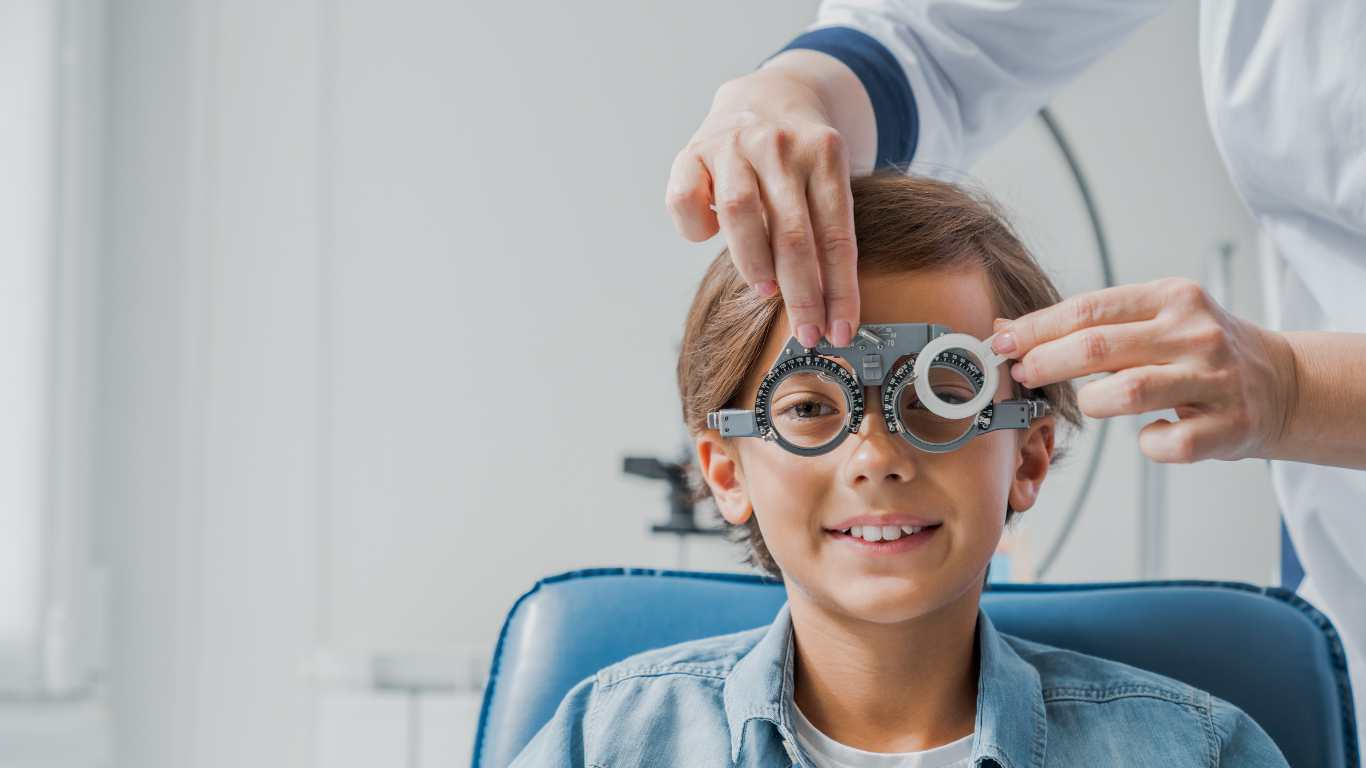
Many parents worry that eye tests may be difficult for children, but pediatric eye exams are simple and painless. Here is what usually happens:
1. Medical History
The doctor asks parents about the child’s health, birth history, and any vision concerns.
2. Vision Screening
Children are asked to read letters, shapes, or pictures from a chart. For younger kids, matching games or picture cards are used.
3. Eye Movement Test
The doctor checks how well the eyes move and work together.
4. Refraction Test
This test checks if the child needs glasses. Special lenses are used to find the correct prescription.
5. Eye Health Examination
The doctor examines the inner and outer parts of the eyes using special light tools.
6. Additional Tests (if needed)
Sometimes extra tests are done for conditions like lazy eye or eye alignment problems.
Everything is done in a friendly and calm way so that children feel safe.
Common Eye Problems in Children
A pediatric eye checkup and vision test clinic often detects these common conditions:
1. Nearsightedness (Myopia)
Children can see close objects clearly but struggle with distant objects like the board in class.
2. Farsightedness (Hyperopia)
Children may see distant objects better but have trouble focusing on nearby objects.
3. Astigmatism
Vision becomes blurry or distorted due to an irregularly shaped cornea.
4. Lazy Eye (Amblyopia)
One eye becomes weaker because it is not used properly by the brain.
5. Crossed Eyes (Strabismus)
Both eyes do not align in the same direction.
Early detection of these problems is very important for successful treatment.
Treatment Options in Pediatric Eye Clinics
Depending on the diagnosis, treatment may include:
- Prescription glasses
- Eye exercises
- Eye patches (for lazy eye)
- Eye drops or medication
- Vision therapy sessions
- In rare cases, minor surgery
Doctors always choose the safest and most effective treatment for children.
How Parents Can Protect Their Child’s Eyes
Apart from regular visits to a pediatric eye checkup and vision test clinic, parents can help protect their child’s vision at home:
- Encourage outdoor play to reduce screen strain
- Limit screen time on phones, tablets, and TV
- Ensure proper lighting while reading
- Provide a healthy diet rich in vitamins A, C, and E
- Teach children not to rub their eyes
- Make sure they wear prescribed glasses regularly
These small habits can make a big difference in eye health.
The Role of Early Detection
One of the most important benefits of pediatric eye clinics is early detection. When eye problems are found early, they are easier to treat and often fully correctable. If ignored, they may become permanent and affect a child’s future learning and lifestyle.
A simple eye test today can prevent serious vision problems tomorrow.
Final Thoughts
A pediatric eye checkup and vision test clinic is not just a place for eye exams—it is a place that protects a child’s future. Good vision helps children learn better, grow confidently, and enjoy life fully. Parents should never wait for clear symptoms before visiting an eye specialist.
Regular checkups, early diagnosis, and proper care can ensure that children enjoy healthy eyesight for life. Taking care of your child’s eyes today means giving them a brighter tomorrow.
Frequently Asked Questions (FAQs)
1. At what age should I take my child for the first eye checkup?
A child should have their first basic eye checkup at around 6 months of age, followed by regular visits as they grow.
2. Is a pediatric eye exam painful for children?
No, eye exams are completely painless. Doctors use simple tools and child-friendly methods to check vision.
3. How do I know if my child needs glasses?
Signs like squinting, sitting too close to screens, or difficulty reading may indicate that your child needs glasses. A proper test at a clinic will confirm it.
4. Can screen time affect my child’s eyesight?
Yes, too much screen time can cause eye strain, dryness, and may increase the risk of myopia (nearsightedness).
5. How often should children visit an eye clinic?
Children should visit a pediatric eye checkup and vision test clinic every 1–2 years, or sooner if any vision problems are noticed.