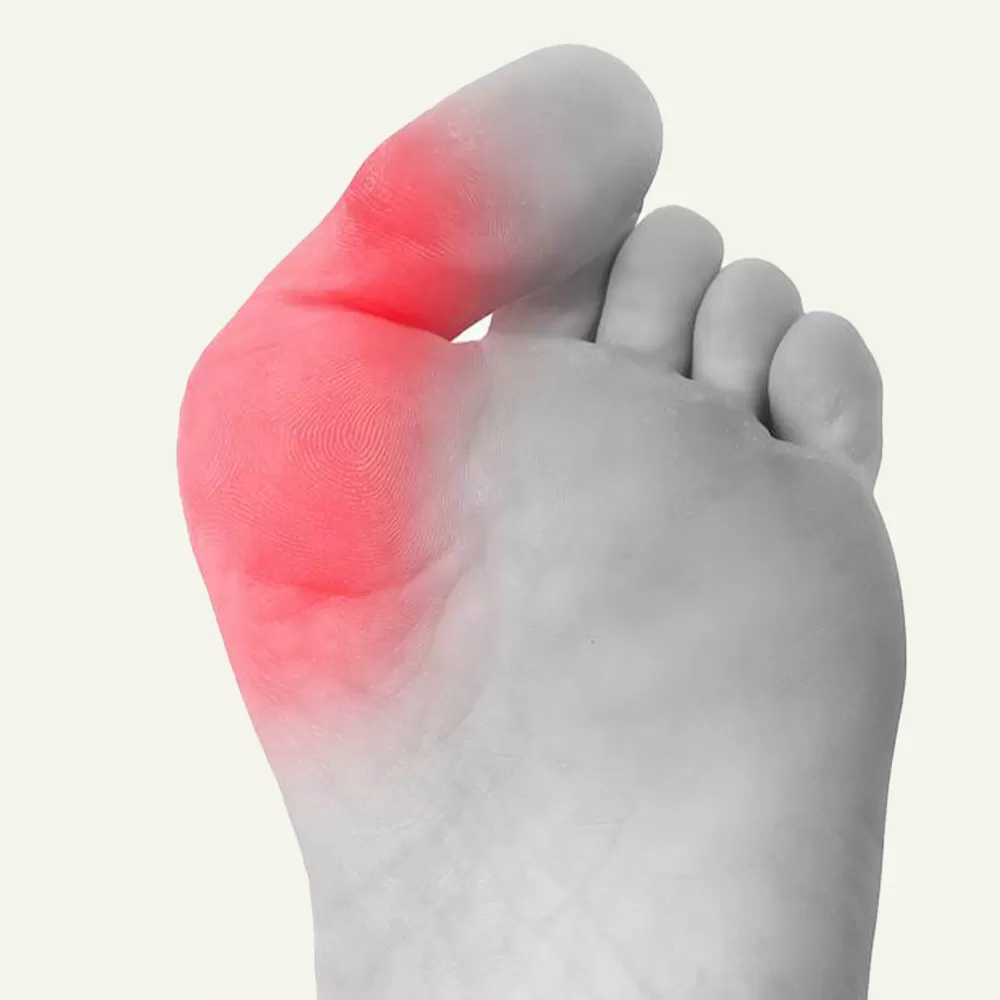

A bunion is a bony bump that forms at the base of the big toe, and it typically develops over months or years. The big toe drifts toward the second toe, and the joint pushes outward. Here is more information on how bunions form and how they affect your daily routine:
Hardened Bump
The bump sits on the inside edge of the foot at the big toe joint. The bone shifts out of place, and the surrounding tissue thickens over time. When shoes rub against the area, the skin may turn red, swollen, or callused.
Some bumps stay small, but others grow large enough to change your foot’s shape. Since the bump has a bony core, bunions do not shrink on their own. A firm, tender lump often signals an early bunion. You may first notice it after a long day on your feet.
Misaligned Foot Bones
A bunion begins when the first metatarsal bone angles outward. The big toe then tilts inward, and the joint between them loses its normal alignment. This shift creates the visible bump.
Inherited foot shape plays a large role in this process. If your parents had bunions, your risk rises. Flat feet raise the risk too, and so do loose ligaments. Women develop bunions more often than men.
Arthritis damages the joint, and foot injuries may weaken its supporting tissue. Both conditions add stress to the big toe joint. Once the bones shift, the misalignment typically progresses without treatment.
Tight or Narrow Shoes
Footwear does not cause bunions by itself. Still, shoes with a narrow toe box speed up the process when a bunion has already started. High heels push weight onto the front of the foot, and pointed toes squeeze the big toe inward. Over months, this pressure can worsen joint misalignment. You don’t need special shoes, but a few features help. When you shop for footwear, look for these traits:
- Wide, deep toe boxes
- High heels under two inches
- Soft uppers with no seams over the bump
- Firm arch support
Increased Pain and Limited Mobility
As a bunion grows, pressure on the joint increases pain. Walking and standing become harder. Some people limp to protect the foot, and this habit strains the knees, hips, or back. Pain may flare after exercise or long shifts on your feet.
Symptoms vary from person to person, and they often worsen with activity. Rest may ease them for a while. Treatment depends on your symptoms. Bring a pair of your everyday shoes to the appointment. If you have a bunion, you may notice these problems:
- Sensation of burning or aching at the big toe joint
- Stiffness that limits toe movement
- Corns or calluses where the toes overlap
- Trouble finding shoes that fit
Get Treatment for Bunions
If a bunion causes pain or limits your activity, schedule a visit with a foot specialist. A provider examines the joint, and an X-ray shows the degree of misalignment. Early options include padding, wider shoes, orthotics, and anti-inflammatory medicine; doctors may recommend surgery when these steps do not relieve pain. Each option has trade-offs, and your provider can explain them.